13 June 2026
Chasing Things With FPV: What the Best Shots in the World Actually Have in Common
Everyone points at the drone. The people who actually make these shots point somewhere else.
Chasing Things With FPV: What the Best Shots in the World Actually Have in Common
Have you ever watched a drone tear after a car or a skier and wondered how the pilot keeps it that close without losing the shot or putting it into a wall?
It's a fair question, because that is the hard part. The footage looks effortless, which is the point. What you don't see is that almost none of it comes down to the drone itself. Read what the people behind the best chase shots in the world actually say about their work and the same three things come up every time, and the camera is never one of them.
Here's what those things are, and why they matter if you're thinking about booking a chase sequence.
Why a chase shot needs FPV in the first place
Start with the obvious question: why not a normal camera drone?
A gimbal-stabilised drone, the kind most people picture, is built to hover and cruise smoothly. It does that job well. What it cannot do is get low, tight and fast next to a moving subject. The coverage of skiing makes the gap plain. A Mavic-style drone can film a skier, but it's limited in how close it can get and how fast it can go, where a skilled FPV pilot can stay with the best riders through difficult terrain.
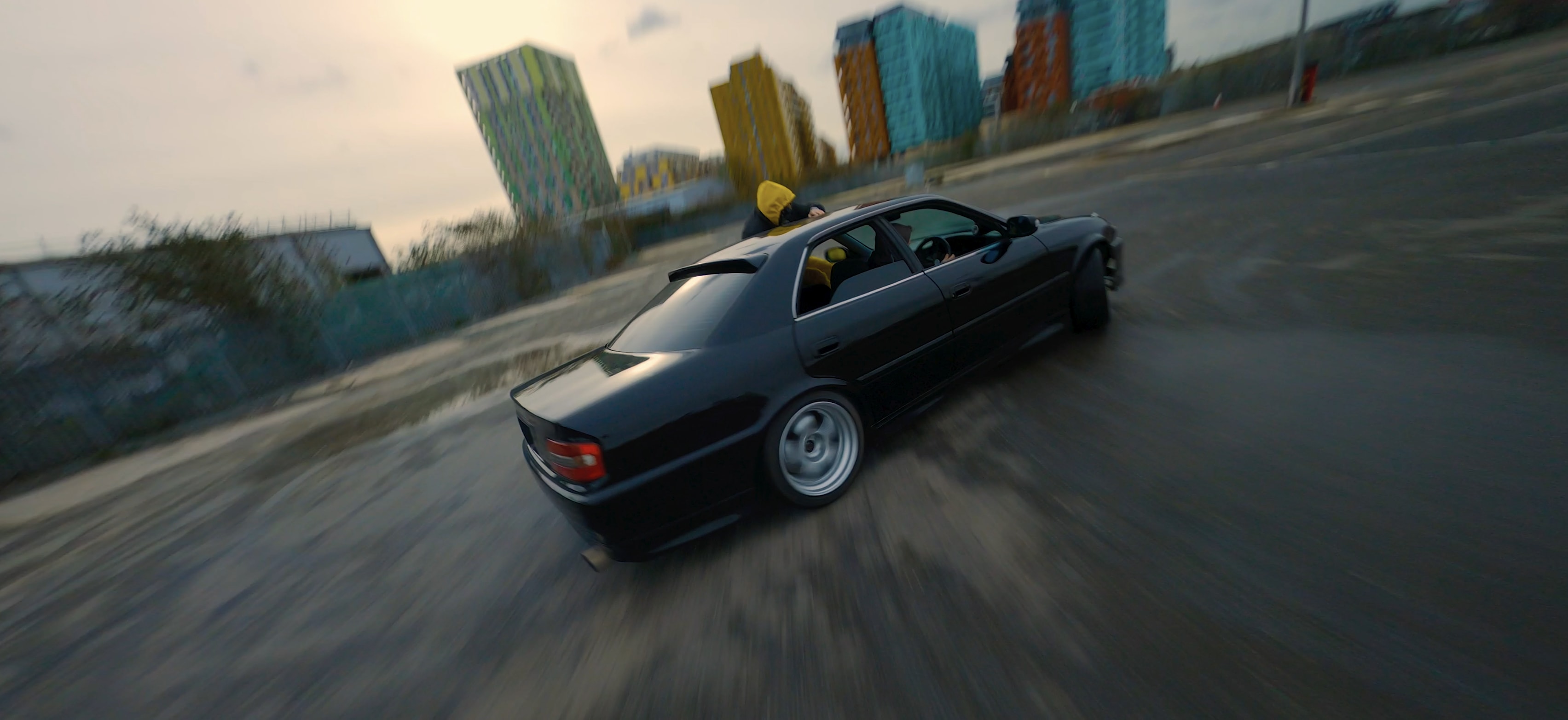
Speed is the headline difference. The 5-inch FPV drones used to chase skiers and snowboarders at the 2026 Winter Olympics weigh somewhere around 600 to 800 grams with a battery and comfortably pass 180 km/h. People use the same class of drone to chase race cars, which is why a skier is well within reach. That is a different tool doing a different job, and it's the only one that puts the camera inside the action rather than watching from outside it.
One: the pilot has to think like the subject
The single thing that separates a good chase shot from a great one is anticipation. A pilot who reacts to the subject is always a beat behind. A pilot who reads where the subject is about to go can already be there.
Gabriel Kocher is probably the clearest example. He grew up skiing and hang-gliding in the Alps, placed second overall in the Drone Racing League world championships in both 2017 and 2019, and now flies FPV for ski films. The way he describes it, when he's flying he's riding the line himself, trying to match the athlete's pace and flow with them. A director he works with puts it from the outside: he thinks like a skier, so he can anticipate what the athlete is likely to do next.
The snowboarder Travis Rice was blunter about it when his team built the live FPV coverage for the Natural Selection event. He said he didn't care how good a pilot was, if they couldn't anticipate the lines the riders were taking and the way they ride, it simply wasn't going to work.
That's worth sitting with, because it's the opposite of how most people assume this works. The skill isn't fast hands. It's knowing the subject well enough to be in the right place before the moment happens.
Two: most of the work happens before anyone flies
The second thing the professionals talk about is planning, and specifically communication, which is harder than it sounds once a drone is involved.
When a French team filmed a skier on serious terrain around Chamonix, the director made the point that a ground camera operator can communicate directly and visually with the subject, but a drone works at a distance, so you can't. Their answer was to talk everything through in detail before the shoot, then coordinate by radio or phone during it. The pilot flew a reconnaissance pass first, the team planned the shot around it, and the skier called in before each run so they could agree exactly how to ski and fly together.
None of that is glamorous and all of it is the job. A chase shot is a choreographed move between two people who often can't see or hear each other in the moment. The footage is decided in the conversation beforehand, not in the air.
Three: the environment fights back, and you plan for that too
The third theme is the least visible and the most telling: keeping the drone working at all in a hostile environment.
The best illustration is the Red Bull urban downhill race in Valparaíso, Chile, where the Dutch Drone Gods followed a mountain biker in a single take from the top of the city to the bottom, through narrow streets and down staircases. To hold the video signal across a whole city, they set up directional antennas along the route and flew a second, larger drone carrying a relay system. It still didn't always hold. When the pilot loses the feed he's flying blind while the drone is still moving fast, and the city is full of power lines, trees and gaps with no margin. They got the shot with only a couple of practice runs.
The same engineering mindset shows up at the top end of the sport. When Red Bull and the Dutch Drone Gods chased a Formula 1 car at Silverstone, they built a custom drone for the job that could go from 60 to 180 mph in under two seconds, because the car was passing 225 mph and nothing off the shelf could stay with it. The pilot was flying through goggles and adjusting the camera angle by hand at the same time.
This is why building and tuning your own equipment matters. The drone has to be matched to the subject and the environment, and when something goes wrong mid-shot, you need to understand the machine well enough to have already planned around it.
What this means if you're booking a chase shoot
Put the three together and the picture is clear. A good chase shot is a pilot who reads the subject, a plan agreed before anyone leaves the ground, and equipment built to survive the specific job. The drone is the easy part.
There's an honesty point buried in all of this too. A clean single-take shot almost never happens on the first try. The pilot behind the well-known bowling-alley flythrough had only started flying FPV a few months earlier and got the final shot somewhere between the eighth and twelfth attempt. That's normal. Planning for the runs it actually takes, rather than promising one perfect pass, is part of doing the work properly.
So when you book a chase sequence, what you're really paying for isn't the aircraft. It's the judgement that decides where to be, the planning that makes the move repeatable, and the build that holds together when the conditions don't cooperate. Get those right and the footage looks effortless, which, as everyone who makes it will tell you, is the whole idea.
Frequently asked questions
- How is an FPV drone different from a normal camera drone for chase work?
- A standard gimbal drone is built to hover and cruise smoothly, so it's limited in how close and how fast it can move next to a subject. An FPV drone is fast and agile enough to stay inside the action. A 5-inch FPV build weighs around 600 to 800 grams and can pass 180 km/h, which is why the same class of drone can chase cars, bikes and skiers.
- Can an FPV drone really keep up with a fast car or athlete?
- Yes, with the right build. Drones built for the F1 chase at Silverstone could go from 60 to 180 mph in under two seconds. For most real-world shoots, cars, bikes, boats and runners are well within range. The limit is rarely the drone's speed and more often the space available to fly safely.
- Do you get the shot in one take?
- Almost never, and any honest operator will tell you the same. A clean single-take chase is the result of several runs, not one perfect pass. Planning for the takes it actually needs is part of doing the job properly, which is why we agree the move in advance rather than promising one flawless attempt.
- What makes a chase shot work if it isn't the drone?
- Three things. The pilot reading where the subject is about to go rather than reacting to it, a shot planned and communicated before anyone flies, and equipment built to hold up in the specific environment. The aircraft is the easy part.
- What do you need from me to plan a chase sequence?
- A clear picture of the subject and its path, the location, and what the footage is for. We usually do a reconnaissance pass first, then plan the move around it and coordinate on the day so the subject and the drone are working to the same plan.
- Is FPV chase footage flown legally and insured?
- Yes. We're fully licensed and carry public liability insurance, which matters for chase work in particular because it often involves flying near vehicles, people or property.